13 · Floor Care

Floor Grinder

Also called Concrete grinder · Floor surface grinder · EDCO grinder · Surface prep grinder

Diamond, carbide or PCD tooling that strips, grinds or removes coatings and levels concrete and stone floors.

Petrol engine

Selected model

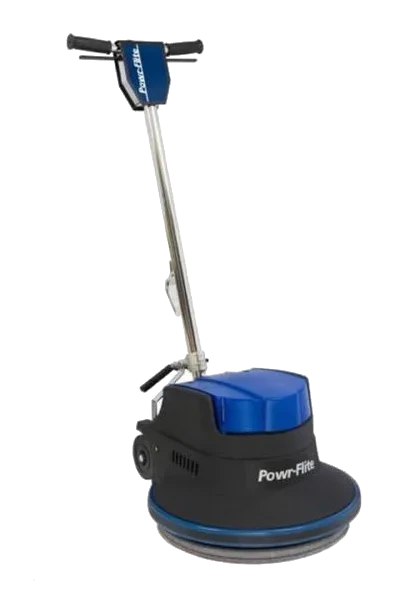
Floor Grinder · Single disc

Lighter, for edges and small rooms

Overview

A floor grinder spins tooling flat against a concrete or stone floor to strip what is on it, grind it level, or polish it. The machine matters less than the tooling fitted to it, which is what actually decides the job.

We rent three: a single disc for edges and small rooms, a dual disc electric for indoor work where fumes are a problem, and a dual disc petrol for large areas with no power on site.

Magna-Blades strip soft glue, adhesive, mastic and flaking paint. Dyma-Dots and Dyma-Segs grind sealers, thinset and small imperfections. PCD segments take off epoxy, polyurea and waterproof membranes. Fine grits polish concrete and restore terrazzo and stone.

Match the tooling to the concrete, not just to the coating — yellow for soft, grey for medium, red for hard — and work through the grits in order, because skipping one leaves scratches the next grit cannot remove. If a coating can be cut with a utility knife, strip it with Magna-Blades instead of grinding it.

Catalogue specifications · Single disc

  • 2EC-NG
  • 1.5 HP, 115/230V
  • Heavy-duty Velcro Dust Shroud makes dust prevention easier. Simply readjust the shroud according to the height of the accessory being used.
  • Built-in weight tray accepts up to 80lbs. of extra weight
  • Multi-Vac port for use with 2 or 3 vacuum hose
  • 22" working width will grind approximately 400-500 sq.ft. per hour at 1/32 with Dyma-Serts
  • Counter-rotating discs prevent machine from pulling side to side and give operator greater control
  • 6 grinding accessories required per loading

Choosing tooling: strip, grind or remove

CSP (concrete surface profile) describes how rough the prepared surface is — 0 leaves the concrete untouched, higher numbers are rougher.

JobToolingUse it forResult
StripMagna-Blades (left-hand: single & dual-disc grinders · right-hand: dual-disc only). Pro-Tungserts III carbide replacements, pack of 6.Soft glue & adhesive, flaking paint, soft mastic, thick industrial buildup — soft material that can be cut with a utility knifeStrips soft coatings without grinding or removing the concrete · CSP 0
GrindDouble Dyma-Dots — yellow (soft concrete), grey (medium), red (hard) · 30, 70 or 120 gritHard thin coatings, concrete sealers, mortar-based thinset, light concrete levelling, smoothing imperfectionsGeneral purpose: smooth, clean surface with a small amount of scratches, no gouging · CSP 1–2
Grind (aggressive)Dyma-Segs — yellow (soft concrete), grey (medium), red (hard) · 18 gritThe same grinding jobs when you need to cut fasterAggressive grind, leaves a medium amount of scratches · CSP 2
RemovePCD with backing segment (left-hand: single & dual-disc grinders · right-hand: dual-disc only)Industrial-strength coatings, waterproof membrane, hard thick coverings, pool/cool deck, epoxy & polyureaIndustrial coating removal, creates a textured concrete surface · CSP varies with the job

Hard vs soft concrete

Concrete is called hard or soft based on its compressive strength and its resistance to abrasion (scratch hardness).

FeatureSoft concreteHard concrete
Compressive strengthTypically under 3,500 PSI (under C25 / 25 MPa)Typically 5,000–8,000+ PSI
Mohs scratch ratingLess than 46 to 9
Common aggregatesSofter aggregates like limestone, shale or sandstoneHarder aggregates like granite, chert or quartzite
SurfaceAbrasive, sandy and prone to dusting or shedding particlesDense, smooth and highly resistant to scratching
Typical usesResidential sidewalks, patios and parking lotsIndustrial floors, nuclear plants and bridges

The inverse rule: soft concrete is highly abrasive, so it eats through tooling much faster. Match the tooling colour to the concrete — yellow for soft, grey for medium, red for hard.

Questions to ask before renting

  1. Where is the job site? (Power available, suspended slab, loading dock, residential/commercial or industrial)
  2. Why is the job being done?
  3. What material needs to come off? (Concrete, asphalt, coating, tile, adhesive, other)
  4. Are you working on concrete?
  5. How thick is the material? (1/16″ grinders, 1/8″ Crete-Planers, 1/4″ Crete-Crusher, other)
  6. What condition is the material in? (Flaking, solid, other)
  7. Is the concrete older than 28 days?
  8. Has any other method already been tried?
  9. What surface texture do you want? (Smooth or textured)
  10. What will go over the prepared surface? (Thin or thicker coating)
  11. How many square feet is the job? Will it be done in sections?
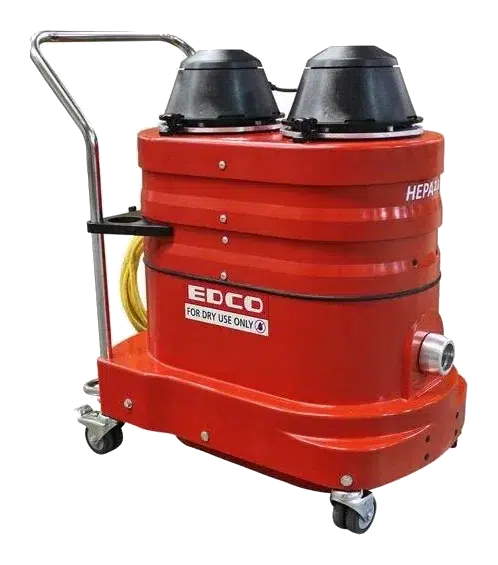
  12. Is dust control needed? (Yes — always use an EDCO vacuum or water)
  13. What machine power, voltage or amperage do you need?
  14. Do you need to grind or clean along a vertical wall?
  15. Do you need to clean out expansion joints or repair random cracks?

Best uses

  • Epoxy and coating prep
  • Stripping soft glue, mastic and flaking paint (Magna-Blades)
  • Grinding sealers, thinset and small imperfections (Dyma-Dots, Dyma-Segs)
  • Removing epoxy, polyurea and waterproof membranes (PCD)
  • Polished concrete (with fine grits)
  • Terrazzo and stone restoration

Not suited for

  • Soft coatings you can cut with a utility knife — strip them with Magna-Blades instead of grinding

Attachments & kits

  • Magna-Blades

    Strip · soft glue, adhesive, flaking paint, soft mastic · CSP 0 · left-hand fits single & dual-disc grinders, right-hand dual-disc only

    Ask the counter about availability and inclusion
  • Pro-Tungserts III

    8-sided carbide replacement inserts · pack of 6

    Ask the counter about availability and inclusion
  • Double Dyma-Dots

    Grind · yellow soft, grey medium, red hard concrete · 30, 70 or 120 grit · CSP 1–2

    Ask the counter about availability and inclusion
  • Dyma-Segs

    Aggressive grind · yellow soft, grey medium, red hard concrete · 18 grit · CSP 2

    Ask the counter about availability and inclusion
  • PCD with backing segment

    Remove · epoxy, polyurea, membranes, thick coatings · left-hand fits single & dual-disc, right-hand dual-disc only

    Ask the counter about availability and inclusion

Troubleshooting

Tooling wears out very quickly

Likely causes

  • Soft, abrasive concrete
  • Tooling rated for harder concrete
  • No dust extraction

Checks to try, in order

  1. Check whether the concrete is soft: sandy, dusting and easy to scratch (typically under 3,500 PSI, below 4 on the Mohs scale).
  2. Soft concrete is highly abrasive — switch to tooling rated for soft concrete (yellow).
  3. Keep the vacuum running so abrasive dust is pulled away from the tooling.

Reference draft — always follow the manufacturer’s manual.

Link to this fixDid this solve the problem?
Tooling glazes over and stops cutting

Likely causes

  • Hard, dense concrete
  • Tooling rated for softer concrete

Checks to try, in order

  1. Dense, smooth concrete that resists scratching is hard (typically 5,000–8,000+ PSI) — use tooling rated for hard concrete (red).
  2. Glazed diamonds can be opened up by grinding briefly on an abrasive surface.

Reference draft — always follow the manufacturer’s manual.

Link to this fixDid this solve the problem?
Coating smears or gums up the tooling

Likely causes

  • Wrong tooling for the coating

Checks to try, in order

  1. Stop grinding. Soft glue, adhesive, mastic and flaking paint should be stripped with Magna-Blades (CSP 0).
  2. Thick industrial coatings, epoxy, polyurea and waterproof membranes need PCD segments.

Reference draft — always follow the manufacturer’s manual.

Link to this fixDid this solve the problem?
Surface is too rough or has gouges

Checks to try, in order

  1. Dyma-Segs (18 grit) are aggressive and leave medium scratches (CSP 2).
  2. For a smoother finish use Double Dyma-Dots and step up through 30, 70 and 120 grit (CSP 1–2).
  3. Ask what's going over the surface — a thin coating needs a smoother profile than a thick one.

Reference draft — always follow the manufacturer’s manual.

Link to this fixDid this solve the problem?
Tooling won't fit the grinder

Checks to try, in order

  1. Right-hand Magna-Blades and right-hand PCD segments are for dual-disc grinders only.
  2. Left-hand versions fit both single- and dual-disc grinders.

Reference draft — always follow the manufacturer’s manual.

Link to this fixDid this solve the problem?
Grinder hops or chatters

Checks to try, in order

  1. Check all tooling segments are fitted and evenly worn.
  2. Make sure the tooling suits the concrete hardness.

Reference draft — always follow the manufacturer’s manual.

Link to this fixDid this solve the problem?
Engine won't startShared · Petrol engine

Likely causes

  • Fuel valve or switch off
  • Stale fuel
  • Low oil sensor
  • Choke position
  • Spark plug cap loose

Checks to try, in order

  1. Turn the fuel valve ON and the engine switch to ON.
  2. Cold engine: close the choke. Warm engine: leave the choke open.
  3. Check there is fresh petrol in the tank — stale or water-contaminated fuel is the most common cause.
  4. Check the engine oil. Many engines have a low-oil shutdown that stops them starting when oil is low or the machine is on a slope — top up and set the machine on level ground.
  5. Make sure the spark plug cap is pushed fully onto the plug.
  6. Pull the starter rope with a smooth, firm pull — don't let it snap back.

If the starter rope is locked or unusually hard to pull, stop — don't force it. Tag the unit and return it to the workshop.

Reference draft — always follow the manufacturer’s manual.

Link to this fixDid this solve the problem?
Starts, then stalls or runs roughShared · Petrol engine

Likely causes

  • Choke left on
  • Blocked air filter
  • Low fuel
  • Low-oil shutdown

Checks to try, in order

  1. Open the choke gradually once the engine has warmed up.
  2. Check the fuel level and that the fuel cap vent isn't blocked.
  3. Check the air filter — a dusty filter chokes the engine. Tap it out or swap it.
  4. Check the oil level again; the low-oil sensor can cut the engine on uneven ground.

Reference draft — always follow the manufacturer’s manual.

Link to this fixDid this solve the problem?
Smell of fuel or a visible leakShared · Petrol engine

Checks to try, in order

  1. Switch the engine off immediately and move away any ignition sources.
  2. Turn the fuel valve OFF.
  3. Check the fuel cap is seated and look for a wet fuel line or carburettor bowl.

Don't run a machine that is leaking fuel. Tag it out and report it.

Reference draft — always follow the manufacturer’s manual.

Link to this fixDid this solve the problem?

Safety

  • This unit is petrol-powered. Only use it indoors with strong ventilation and CO monitoring, or choose an electric grinder.
  • Grinding concrete creates silica dust — use an EDCO HEPA vacuum or water, and wear a respirator.

For petrol engine

  • Refuel only with the engine off and cool. No smoking or open flames nearby.
  • Exhaust contains carbon monoxide — never run it indoors, in trenches or in enclosed spaces without ventilation.
  • Wear hearing protection, safety glasses and safety boots.

Videos & links

Related equipment

All Floor Care →

Always follow the manufacturer’s manual and site safety rules. Favourites and viewing history are stored on this device.