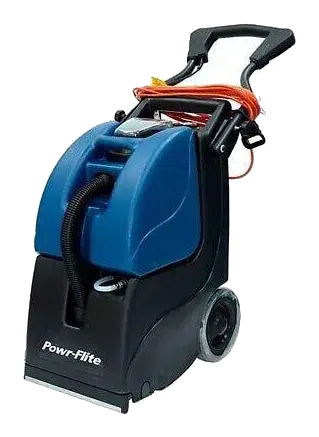
A spotter is a small portable extractor for one stain or one worn patch rather than a whole floor. Same principle as the big machine, solution in and soil straight back out, in something that can be carried to the mark.
Coffee, food and pet stains, hallways and entrances that wear faster than the rest of the room, upholstery, stairs and car interiors, and quick clean-ups between deep cleans.
Blot a fresh spill before extracting it. Anything still sitting on the surface should come up on a cloth, not be driven down into the pile.
Rinse with plain water and finish with a dry pass, or the cleaned spot dries with a ring around it where the solution spread.
Catalogue specifications
IDEAL FOR SOFAS, DRAPES, MATTRESS AND CAR SEATS.
GET THE WAND AS AN ADD- ON AND USE TO CLEAN CARPET
NOTE IT DOES NOT HEAT THE WATER, BUT HOT WATER CAN BE UTILIZED IN THE UNIT
MODELS AVAILABLE;
MOD PS35E
Solution 3.5 Gal
Recovery Tank 2.5 Gal
Cleaning Path 4' clear sight upholstery tool
Vac Motor (UL Listed) 2-stage
CFM 104
Waterlift 89"
P.S.I. 55
Pump oscillating pump
Large 3.5 gallon solution and recovery tanks for extended cleaning between refills
Expandable solution and vacuum hose stretches from 2.5' to 10'
What this will run
Typical figures for this class of machine. Check the data plate before promising a customer.
Best uses
Coffee, food and pet stains
Hallways and entrances
Upholstery, stairs and car interiors
Quick clean-ups between deep cleans
Troubleshooting
A ring or watermark is left around the spot
Checks to try, in order
Too much solution was used — rinse the area with plain water.
Make several dry vacuum passes, feathering out past the edge of the spot.
Reference draft — always follow the manufacturer’s manual.
Always follow the manufacturer’s manual and site safety rules. Favourites and viewing history are stored on this device.
FRAUD ALERT
We are aware of an individual claiming to be the CEO of Hilton Machineries & Sales Company and falsely representing that they are purchasing equipment through Massive Equipment & Sales Ltd.
Massive Equipment has no affiliation with this company or individual. Do not send funds, deposits or financial information in connection with these communications.
To verify any request, contact us directly at 345-949-7990 or info@massivegroup.com.