09 · Heavy Equipment

Skid Steer Loader

Also called Skid steer · Skid loader · Bobcat · Wheeled loader

A compact, wheeled multi-purpose loader — fast and nimble on hard ground, with lots of attachments.

Diesel machine

Overview

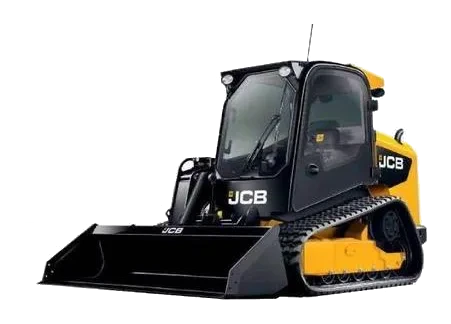
A skid steer, sometimes called a skid loader, is a compact, multi-purpose construction machine often used for digging. It's manoeuvrable and lightweight, and its arms take many tools for construction and landscaping.

A skid steer has either four wheels or two tracks. The axles on each side move together, and the operator drives each side separately.

The wheels stay in a fixed, straight line and don't turn. To turn, the operator speeds up the wheels on one side, so the machine skids around — which is where the name comes from.

Skid steers have the advantage on hard ground: a higher top speed and easier tight turns on concrete or asphalt.

Catalogue specifications

  • Fuel Diesel
  • Fuel Tank 27.3gal
  • Loader
  • Loader Lift Capacity With Bucket 6056.1lb
  • Breakout Force 6543.4lb
  • Tipping Angle 5447.7degrees
  • Bucket Capacity 0.6yd3
  • Bucket Width 78.4in
  • Ground Clearance 9.85in
  • Wheelbase 4.11ft in
  • Dig Depth 393.71in
  • Dump Angle 42degrees
  • Dump Height 7.55ft in
  • Loadover Height 9514.44ft in
  • Max. Reach @ Full Height 4.27ft in
  • Overall Height 6.89ft in
  • Overall Length 152.76in
  • Pin Height 10.5ft in
  • Quick Hitch Turning Radius 4.93ft in
  • Reach @ Ground Level 3.61ft in
  • Rear Chassis Turning Radius5.78ft in
  • Rollback - Ground Level 30degrees

Best uses

  • Working on concrete, asphalt and hard ground
  • Moving soil, gravel and debris
  • Site clean-up and loading
  • Landscaping with attachments

Not suited for

  • Mud, sand and soft ground — use a compact track loader

Troubleshooting

Loader arms or drive won't respond

Checks to try, in order

  1. Lower the safety bar and fasten the seat belt.
  2. Press the hydraulic/drive enable button if the machine has one.
  3. Make sure you're seated — the seat switch cuts hydraulics.

Reference draft — always follow the manufacturer’s manual.

Link to this fixDid this solve the problem?
Attachment won't lock onto the quick-attach plate

Checks to try, in order

  1. Tilt the plate back to seat the attachment fully.
  2. Push both lock levers fully down and check the pins pass through the attachment.

Never operate with an attachment that isn't locked.

Reference draft — always follow the manufacturer’s manual.

Link to this fixDid this solve the problem?
Nothing happens when the key is turnedShared · Diesel machine

Likely causes

  • Isolator off
  • Seat / seat-belt / lap-bar interlock
  • Controls not in neutral
  • Flat battery

Checks to try, in order

  1. Check the battery isolator / master switch is ON.
  2. Sit in the seat, fasten the seat belt and lower the safety bar — interlocks prevent starting otherwise.
  3. Put the controls in neutral and the hydraulic lockout lever in the locked position.
  4. Check the battery terminals are tight and free of corrosion.

If the battery is flat, don't jump-start it unless you've been trained to — call the workshop.

Reference draft — always follow the manufacturer’s manual.

Link to this fixDid this solve the problem?
Cranks but won't startShared · Diesel machine

Likely causes

  • Out of fuel / air in fuel
  • Glow plugs not preheated
  • E-stop engaged

Checks to try, in order

  1. Check the fuel gauge. Diesel engines that run dry often need the fuel system bled before they'll start.
  2. Turn the key to the preheat position and wait for the glow-plug light to go out before cranking.
  3. Check the emergency stop button isn't pressed in.
  4. Crank for no more than 10–15 seconds at a time, then let the starter rest.

Reference draft — always follow the manufacturer’s manual.

Link to this fixDid this solve the problem?
Arms, boom or tracks won't move or are slowShared · Diesel machine

Likely causes

  • Lockout lever engaged
  • Cold oil
  • Low hydraulic oil
  • Leak

Checks to try, in order

  1. Raise the hydraulic lockout / safety lever or disengage the control lock.
  2. Let the machine warm up for a few minutes before working it hard.
  3. Check the hydraulic oil sight glass with the machine level and attachments lowered.
  4. Look for hydraulic oil leaks under the machine and at hose ends.

Never touch a pinhole hydraulic leak — high-pressure oil can inject through skin. Stop and report it.

Reference draft — always follow the manufacturer’s manual.

Link to this fixDid this solve the problem?
Warning light, alarm or overheatingShared · Diesel machine

Checks to try, in order

  1. Stop work, lower attachments to the ground and let the engine idle — don't shut a hot engine off abruptly unless told to by the alarm.
  2. Check whether the radiator / cooler screen is blocked with dust, grass or debris.
  3. Only check coolant once the engine is cold. Never open a hot radiator cap.

Red warning lights mean stop. Note the code or symbol and call the workshop before continuing.

Reference draft — always follow the manufacturer’s manual.

Link to this fixDid this solve the problem?

Safety

  • Only get in or out with the arms fully lowered and the bucket on the ground.
  • Never reach out of the cab while the machine is running.

For diesel machine

  • Only trained, authorised operators should drive or operate this machine.
  • Walk around the machine before starting: leaks, damage, tyres or tracks, and people nearby.
  • Wear the seat belt, use three points of contact getting on and off, and use a spotter in tight areas.
  • Check for overhead power lines and underground services before digging or lifting.

Videos & links

Related equipment

All Heavy Equipment →

Always follow the manufacturer’s manual and site safety rules. Favourites and viewing history are stored on this device.