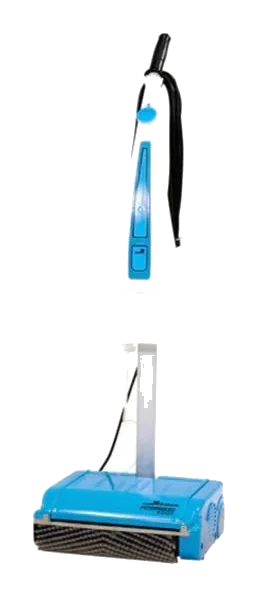
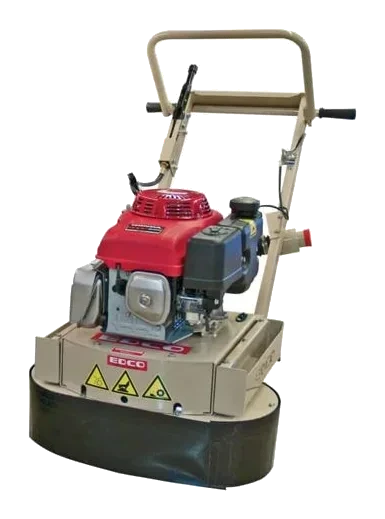
A floor polisher is one large disc turning flat against the floor. Change the pad or brush and the same machine scrubs, strips, waxes or buffs.
Buffing and polishing vinyl, tile and stone, scrubbing with brushes or pads, stripping and re-waxing. Offices, stores and schools are the usual settings.
It steers by handle height, which is what catches people out. Raise the handle slightly and the machine swings one way, lower it and it swings back. Small movements are enough, and holding the handle level keeps it turning on the spot.
Start in the middle of the room, away from walls and furniture, until the swing is under control.
Catalogue specifications
PRODUCT OVERVIEW MOD# M171-3
Pad Speed 175RPM
Motor 1HP
Transmission All Steel Triple Planetary Gear Box
Voltage/ Power Cord 120V / 60Hz 50' - 14/3
Pad/ Brush Size 16" - 17"
Weight (lbs) 97
Standard 1 hp floor machines are perfect for jobs with a lower power demand. These machines deliver aggressive cleaning power for scrubbing, stripping, and buffing any hard floor job. Pad Drivers and Scrub Brushes not included.
Patented rotationally molded one-piece housing reduces noise and vibration for improved operator comfort
Heavy-duty all steel dual and triple (HD Models) planetary transmissions stand up to the most demanding work
Ultra high output motor maintains the power and torque necessary for the toughest floor care requirements
All metal handle housing, tube and trigger assembly provides long lasting durability
Thumb activated safety interlock switch prevents accidental start-up
What this will run
Typical figures for this class of machine. Check the data plate before promising a customer.
Best uses
Buffing and polishing vinyl, tile and stone
Scrubbing with brushes or pads
Stripping and re-waxing
Offices, stores and schools
Troubleshooting
Machine jumps or runs away
Checks to try, in order
Check the pad is centred on the drive block.
Hold the handle at waist height with a relaxed grip.
Replace a pad that's worn unevenly.
Reference draft — always follow the manufacturer’s manual.
Always follow the manufacturer’s manual and site safety rules. Favourites and viewing history are stored on this device.
FRAUD ALERT
We are aware of an individual claiming to be the CEO of Hilton Machineries & Sales Company and falsely representing that they are purchasing equipment through Massive Equipment & Sales Ltd.
Massive Equipment has no affiliation with this company or individual. Do not send funds, deposits or financial information in connection with these communications.
To verify any request, contact us directly at 345-949-7990 or info@massivegroup.com.