13 · Floor Care

Floor Washer

Also called Floor scrubber · Duplex floor cleaner · Counter-rotating brush scrubber

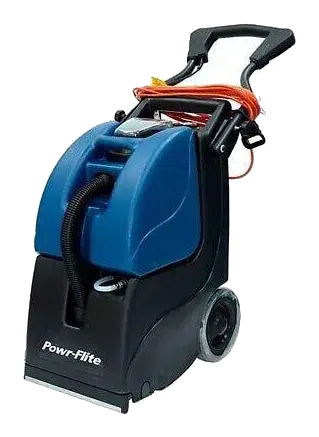
A compact scrubber with counter-rotating brushes that washes and dries almost any hard floor in one pass.

Electric (corded)

Overview

A floor washer washes and scrubs floors, typically over larger areas in commercial or industrial settings. It combines water, cleaning solution and scrubbing brushes to deep-clean hard floors efficiently.

Cleans carpets, grouted tile, concrete, hardwood, marble, profiled ceramics, vinyl, rubberised floors, pirelli, escalators and more.

Unique 800,000-bristle brushes counter-rotate at 780 RPM, lifting dirt, water and grime from the floor and replacing mops and bulky machinery.

Simply fill the solution tank and squeeze the trigger to feed clean water onto the two counter-rotating brushes.

Conveyors recover the dirty water and deposit it into the central recovery tank.

A 90-degree tilt angle reaches hard-to-reach areas such as under countertops and into tight corners.

Catalogue specifications

  • Cleans carpets, grouted tile, concrete, hardwood, marble, profiled ceramics, vinyl, rubberized floors, pirelli, escalators and more
  • Remarkable performance resulting from unique 800,000-bristle brushes counter-rotating at 780 RPM actively lifting dirt, water and grime from the floor surface, replacing mops and bulky machinery
  • Simply fill the solution tank and squeeze the trigger to feed clean water onto two counter-rotating brushes
  • Conveyors recover the dirty water depositing it into the central recovery tank
  • Designed with efficiency in mind, the 90 degree tilt angle allows you to clean hard to reach areas such as under counter-tops and into tight corners
  • 14" Cleaning Width

Best uses

  • Grouted tile and textured floors
  • Kitchens, bathrooms and commercial spaces
  • Under counters and into corners
  • Escalators and rubber floors

Troubleshooting

Leaving dirty water behind

Checks to try, in order

  1. Empty the recovery tank.
  2. Clean the conveyors and recovery path.
  3. Worn brushes don't lift water well — ask for replacements.

Reference draft — always follow the manufacturer’s manual.

Link to this fixDid this solve the problem?
No clean water reaching the brushes

Checks to try, in order

  1. Fill the solution tank.
  2. Squeeze the solution trigger fully.
  3. Clear a blocked feed line or filter.

Reference draft — always follow the manufacturer’s manual.

Link to this fixDid this solve the problem?
Tool won't switch onShared · Electric (corded)

Likely causes

  • Tripped GFCI or breaker
  • Lock-off button
  • Damaged cord
  • Dead outlet

Checks to try, in order

  1. Check the outlet works and reset any GFCI / RCD that has tripped.
  2. Release the lock-off button or safety switch before squeezing the trigger.
  3. Inspect the cord and extension lead for cuts, crushed sections or damaged plugs.
  4. If running from a generator, make sure it's running and its breaker hasn't tripped.

A damaged cord or plug means the tool is out of service. Tag it and return it — never tape a cord.

Reference draft — always follow the manufacturer’s manual.

Link to this fixDid this solve the problem?
Keeps tripping the breakerShared · Electric (corded)

Likely causes

  • Circuit overloaded
  • Undersized extension cord
  • Blunt accessory

Checks to try, in order

  1. Plug into a circuit with nothing else heavy running on it.
  2. Use a shorter, heavier extension cord. Long, thin cords starve the motor and trip breakers.
  3. Don't force the tool — a dull bit, blade or disc makes the motor draw more current.

Reference draft — always follow the manufacturer’s manual.

Link to this fixDid this solve the problem?
Overheating, burning smell or heavy sparkingShared · Electric (corded)

Checks to try, in order

  1. Stop and unplug the tool.
  2. Check the motor vents aren't blocked with dust.
  3. Let it cool, fit a sharp accessory and let the tool's weight do the work.

Heavy sparking from the vents or a burning smell that returns points to worn brushes or a failing motor — workshop only.

Reference draft — always follow the manufacturer’s manual.

Link to this fixDid this solve the problem?

Safety

For electric (corded)

  • Inspect the cord and plug before every use. Use a GFCI/RCD outdoors or near water.
  • Unplug before changing blades, bits, discs or pads.
  • Wear eye protection, and a dust mask when cutting, grinding or sanding masonry.

Videos & links

Related equipment

All Floor Care →

Always follow the manufacturer’s manual and site safety rules. Favourites and viewing history are stored on this device.