15 · Power Tools

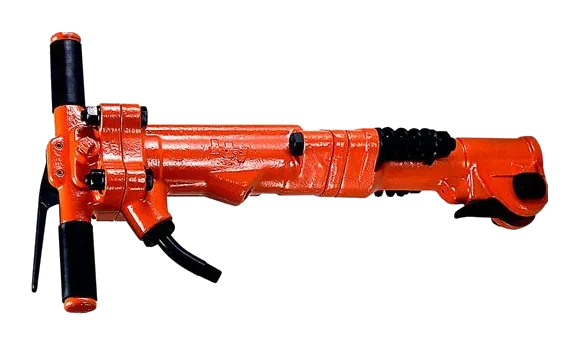
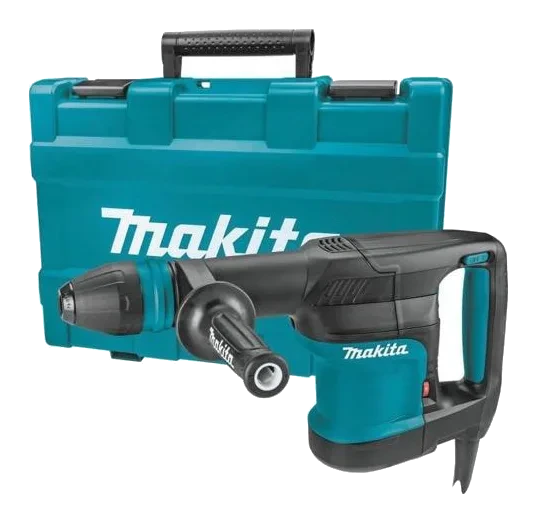
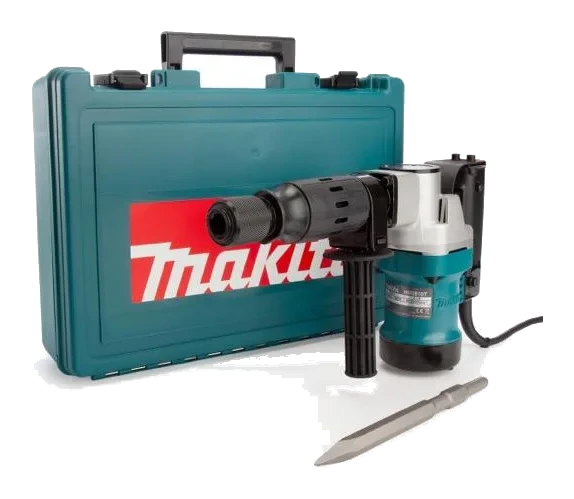
Breaker Jackhammer

Also called Electric breaker · Breaker hammer · Electric jackhammer · Makita breaker

A heavy electric breaker that delivers high-impact blows to break concrete, asphalt, stone and pavement.

Electric (corded)

Overview

An electric breaker drives a chisel down into concrete with repeated high-impact blows. It plugs into the mains or a generator big enough to run it, so unlike an air breaker it needs no compressor and no air hose.

Breaking slabs, sidewalks and driveways, removing old pavement, breaking rock and boulders, and foundation demolition.

It is far too heavy for overhead work, and it does not drill — a hole is a rotary hammer's job.

Let the weight of the breaker do the work. Leaning on it does not break concrete any faster and wears the operator out in half the time.

Catalogue specifications

  • AMPS : 14
  • Blows Per Minute (variable speed) : 730 - 1,450 BPM
  • Impact Energy (ft.lbs.) : 25.7
  • Impact Energy (Joules) : 34.9 J
  • Vibration Control : Yes
  • Vibration (m/s ) : 7
  • Noise Level : 101 dB
  • Cord Length (ft) : 16.4'
  • Overall Length : 32-1/2"
  • Net Weight : 41.9 lbs.
  • Bit Type : 1-1/8" Hex
  • Power Type : Corded
  • Breaker/Demo class : 40

Best uses

  • Breaking slabs, sidewalks and driveways
  • Removing old pavement
  • Breaking rock and boulders
  • Foundation demolition

Not suited for

  • Overhead work — it's far too heavy
  • Drilling holes — use a rotary hammer

Troubleshooting

Motor runs but won't hammer

Checks to try, in order

  1. Press the bit firmly against the work — some breakers only hammer under load.
  2. Check the bit is fully inserted and locked.

Reference draft — always follow the manufacturer’s manual.

Link to this fixDid this solve the problem?
Chisel won't come out

Checks to try, in order

  1. Unplug, rotate the retainer fully to its release position, then pull the chisel out.

A mushroomed or worn shank jams in the tool — return it rather than hammering it out.

Reference draft — always follow the manufacturer’s manual.

Link to this fixDid this solve the problem?
Tool won't switch onShared · Electric (corded)

Likely causes

  • Tripped GFCI or breaker
  • Lock-off button
  • Damaged cord
  • Dead outlet

Checks to try, in order

  1. Check the outlet works and reset any GFCI / RCD that has tripped.
  2. Release the lock-off button or safety switch before squeezing the trigger.
  3. Inspect the cord and extension lead for cuts, crushed sections or damaged plugs.
  4. If running from a generator, make sure it's running and its breaker hasn't tripped.

A damaged cord or plug means the tool is out of service. Tag it and return it — never tape a cord.

Reference draft — always follow the manufacturer’s manual.

Link to this fixDid this solve the problem?
Keeps tripping the breakerShared · Electric (corded)

Likely causes

  • Circuit overloaded
  • Undersized extension cord
  • Blunt accessory

Checks to try, in order

  1. Plug into a circuit with nothing else heavy running on it.
  2. Use a shorter, heavier extension cord. Long, thin cords starve the motor and trip breakers.
  3. Don't force the tool — a dull bit, blade or disc makes the motor draw more current.

Reference draft — always follow the manufacturer’s manual.

Link to this fixDid this solve the problem?
Overheating, burning smell or heavy sparkingShared · Electric (corded)

Checks to try, in order

  1. Stop and unplug the tool.
  2. Check the motor vents aren't blocked with dust.
  3. Let it cool, fit a sharp accessory and let the tool's weight do the work.

Heavy sparking from the vents or a burning smell that returns points to worn brushes or a failing motor — workshop only.

Reference draft — always follow the manufacturer’s manual.

Link to this fixDid this solve the problem?

Safety

  • Wear hearing protection, safety glasses, steel-toe boots and a respirator for silica dust.
  • Take regular breaks from vibration.

For electric (corded)

  • Inspect the cord and plug before every use. Use a GFCI/RCD outdoors or near water.
  • Unplug before changing blades, bits, discs or pads.
  • Wear eye protection, and a dust mask when cutting, grinding or sanding masonry.

Videos & links

Related equipment

All Power Tools →

Always follow the manufacturer’s manual and site safety rules. Favourites and viewing history are stored on this device.