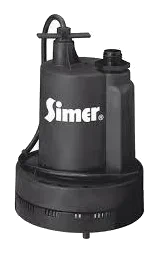
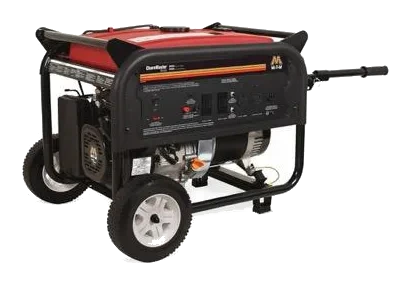
A trash pump moves liquids that contain hard and soft solids such as leaves, twigs, pebbles, silt and mud. Most trash pumps are centrifugal pumps.
They're sometimes called wastewater, sewage or sludge pumps — but to move a thick fluid with a high solids content you'll need a true sludge pump, not a trash pump.
Trash pumps come in many sizes. Contractors carry small petrol or electric units from jobsite to jobsite. There are also large trailer-mounted, diesel-driven models, sometimes called tow-behind, standard or industrial trash pumps.
Different trash pumps have different impeller designs to handle specific types and sizes of material.
Use a trash pump for any job that moves solids-laden fluid from point A to point B without high pressure. For high pressure you need a high-head pump.
Catalogue specifications
UNIT SPECIFICATIONS
Suction x Discharge 3 x 3 in
76 x 76 mm
Max. Water Capacity 396 gpm 1500 lpm
Max. Lift 25 ft 7.6 m
Max. Head 95 ft 29 m
Max. Pressure 41.1 psi 283 kPA
Max. Pressure 1.5 psi 37 kPA
Fuel Tank Capacity 6.3 gal 6 L
Optional Wheel Kit UWK
DIMENSIONS & WEIGHTS
Overall Length 28.7 in 729 mm
Overall Width 21.7 in 551.2 mm
Overall Height 23 in 584.2 mm
Operating Weight 163 lb 74 kg
ENGINE SPECIFICATIONS
Engine Make/Model Honda GX-240
Start Method Recoil
Engine Power 7.1 HP 5.3 kW
Engine RPM 3600
Fuel Type Gasoline
What this will run
Typical figures for this class of machine. Check the data plate before promising a customer.
Best uses
General site dewatering, such as drainage ditches
Draining water from a containment
Creek bypass when the water carries leaves, stones or twigs
Sewer bypass projects
Mining operations
Agricultural irrigation
Not suited for
Thick sludge with a high solids content — use a true sludge pump
High-pressure or high-lift jobs — use a high-head pump
Troubleshooting
Engine runs but no water comes out
Likely causes
Not primed
Air leak on suction side
Suction lift too high
Blocked strainer
Checks to try, in order
Stop the engine and fill the casing with water through the priming port.
Check every suction-hose coupling and gasket. One small air leak stops the pump from priming.
Move the pump closer to the water level — suction lift may be too high.
Check the strainer isn't blocked and the drain plug is closed.
Reference draft — always follow the manufacturer’s manual.
Turn the fuel valve ON and the engine switch to ON.
Cold engine: close the choke. Warm engine: leave the choke open.
Check there is fresh petrol in the tank — stale or water-contaminated fuel is the most common cause.
Check the engine oil. Many engines have a low-oil shutdown that stops them starting when oil is low or the machine is on a slope — top up and set the machine on level ground.
Make sure the spark plug cap is pushed fully onto the plug.
Pull the starter rope with a smooth, firm pull — don't let it snap back.
If the starter rope is locked or unusually hard to pull, stop — don't force it. Tag the unit and return it to the workshop.
Reference draft — always follow the manufacturer’s manual.
Always follow the manufacturer’s manual and site safety rules. Favourites and viewing history are stored on this device.
FRAUD ALERT
We are aware of an individual claiming to be the CEO of Hilton Machineries & Sales Company and falsely representing that they are purchasing equipment through Massive Equipment & Sales Ltd.
Massive Equipment has no affiliation with this company or individual. Do not send funds, deposits or financial information in connection with these communications.
To verify any request, contact us directly at 345-949-7990 or info@massivegroup.com.