18 · Saws
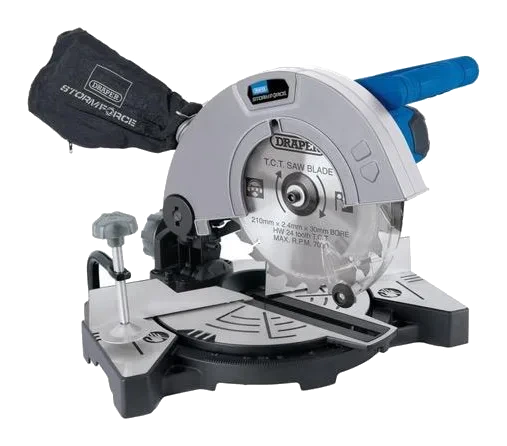
Miter Saw
A swing-arm circular saw for fast, precise crosscuts and angled cuts in trim, framing and molding.
18 · Saws
Also called Skil saw · Skilsaw · Handheld circular saw
A handheld saw for fast, straight cuts in lumber, plywood, sheet goods, plastic and — with the right blade — metal.
Electric (corded)A circular saw drives a toothed blade through the work as the operator pushes it along a line. It is the fast way to cut something too big to carry to a bench.
We rent a 7-1/4 in, the standard size. The blade fitted decides the material — lumber, plywood and sheet goods as standard, and with the right blade, plastic or metal.
Framing lumber, plywood and OSB sheets, decking, and rough demolition cuts.
Set the blade depth about a quarter inch below the material; any deeper exposes more blade than the cut needs. Support both sides of the cut so the kerf cannot close and pinch the blade, which is what causes kickback.
Typical figures for this class of machine. Check the data plate before promising a customer.
Reference draft — always follow the manufacturer’s manual.
Reference draft — always follow the manufacturer’s manual.
Reference draft — always follow the manufacturer’s manual.
A damaged cord or plug means the tool is out of service. Tag it and return it — never tape a cord.
Reference draft — always follow the manufacturer’s manual.
Reference draft — always follow the manufacturer’s manual.
Heavy sparking from the vents or a burning smell that returns points to worn brushes or a failing motor — workshop only.
Reference draft — always follow the manufacturer’s manual.
No fixes match this symptom.
18 · Saws
A swing-arm circular saw for fast, precise crosscuts and angled cuts in trim, framing and molding.

15 · Power Tools
A powerful back-and-forth saw that cuts wood, metal, pipe, drywall and more — the demolition workhorse.

15 · Power Tools
A handheld planer that shaves thin layers off wood to flatten boards, trim doors and chamfer edges.
Always follow the manufacturer’s manual and site safety rules. Favourites and viewing history are stored on this device.